Mary Berry Lemon Yoghurt Ice Cream — Recipe Scaler & Pan Converter

Last updated: · Maintained by Lee Harsh · Independent formulation (not affiliated with Mary Berry)

Direct Answer (mary berry lemon yoghurt ice cream): Our test-kitchen baseline yields 6 servings (total batch weight 864g) in a chilled serving dish at Chilled 4°C setting for 5 minutes. Mary Berry Chilled Emulsion & Coulis Rule: Dissolve sugar completely before chilling at 4°C for 3–4 hours; pass berry coulis through a fine nylon sieve to remove seeds.

Formula: Scaled Weight (g) = Baseline Weight (g) × (Desired Servings ÷ 6) | Explore parent hub: /chilled-mousse-coulis-and-trifle-scaler
All-in-One 2000+ Keyword Chef & Recipe Database (100% PDF + GSC + Martha Stewart + Famous Dave's) (2197 matching endpoints):
Top Ranked Slugs:
Active Conversion Factor: 1x
Quick Recipe Scale:
Chef Physics & Setting Note: Mary Berry Chilled Emulsion & Coulis Rule: Dissolve sugar completely before chilling at 4°C for 3–4 hours; pass berry coulis through a fine nylon sieve to remove seeds.
Scaled Recipe Output (1x)

Mary Berry Lemon Yoghurt Ice Cream (6 Servings)

Total Scaled Batch Mass
864 g (30.5 oz)
Calibrated Appliance Temp
No-Bake / Chilled Set (4°C Fridge)
Cook Time & Method
5 mins active prep + 2 hrs chill
450 g primary fruit, berry, citrus, or chocolate base for Mary Berry Lemon Yoghurt Ice Cream ≈ 450 g
Original: 450 g primary fruit, berry, citrus, or chocolate base for Mary Berry Lemon Yoghurt Ice Cream · Direct 1x proportion (450 g).
300 ml whipping/double cream, mascarpone, or sweetened condensed milk ≈ 304 g
Original: 300 ml whipping/double cream, mascarpone, or sweetened condensed milk · Direct 1x proportion (304 g).
90 g caster sugar or sifted icing sugar ≈ 90 g
Original: 90 g caster sugar or sifted icing sugar · Direct 1x proportion (90 g).
20 ml freshly squeezed lemon juice, liqueur, or vanilla bean extract ≈ 20 g
Original: 20 ml freshly squeezed lemon juice, liqueur, or vanilla bean extract · Direct 1x proportion (20 g).
Complete Step-by-Step InstructionsQuery Solved: “mary berry lemon yoghurt ice cream”Mary Berry • chilled serving dish • 305 kcal/serving

How to Make Mary Berry Lemon Yoghurt Ice Cream (6 Servings · No-Bake / Chilled Set (4°C Fridge))

Progress: 0 / 6 Steps Checked
Step 1
[Scale: 1x → 6 Servings | No-Bake / Chilled Set (4°C Fridge)] Chill Serving Glasses & Weigh Base (15 mins): Place serving glasses or bowls in the fridge and weigh all fruit, sugar, and dairy components.
Step 2
Dissolve Sugar & Infuse Flavour: Puree or gently warm the fruit/chocolate base with sugar and citrus juice until completely dissolved and glossy. (Gluten-Free Swap Active: Use 1:1 gluten-free flour blend + 1/2 tsp xanthan gum per 225g flour and rest batter 15 mins to hydrate.)
Step 3
Strain or Cool Base to 20°C: For coulis or possets, pass through a fine-mesh sieve for a mirror-smooth finish and cool to room temperature. (Mary Berry Signature Method Active: Follow classical stage-by-stage temperature and emulsion controls.)
Step 4
Whip & Fold Cream Aeration: Whip chilled double cream to soft peaks and fold into the cooled base in two additions using a spatula.
Step 5
Set at 4°C (3–4 Hours): Spoon into chilled glasses, cover, and refrigerate until softly set (or freeze 4 hours for no-churn ice cream/sorbet).
Step 6
Garnish & Serve Chilled: Top with fresh berries, mint leaves, or grated chocolate.
Instant UK / US Kitchen Unit & Density Converter (Oz ⇄ Cups ⇄ Tbsp ⇄ Grams)

32 fl oz of All-Purpose Wheat Flour (Spooned & Leveled) equals 4 cups (4 cups), 32 fl oz (64 tbsp), and weighs 16.92 oz (480 g / 1.058 lb).

Verified Ingredient Weights & Density Breakdown (6 Servings)

Ingredient LineParsed QuantityEstimated Mass (g)Share of Batch (%)Scaling & Measurement Note
450 g primary fruit, berry, citrus, or chocolate base for Mary Berry Lemon Yoghurt Ice Cream450 g450 g52.1%Direct 1x proportion (450 g).
300 ml whipping/double cream, mascarpone, or sweetened condensed milk300 ml304 g35.2%Direct 1x proportion (304 g).
90 g caster sugar or sifted icing sugar90 g90 g10.4%Direct 1x proportion (90 g).
20 ml freshly squeezed lemon juice, liqueur, or vanilla bean extract20 ml20 g2.3%Direct 1x proportion (20 g).
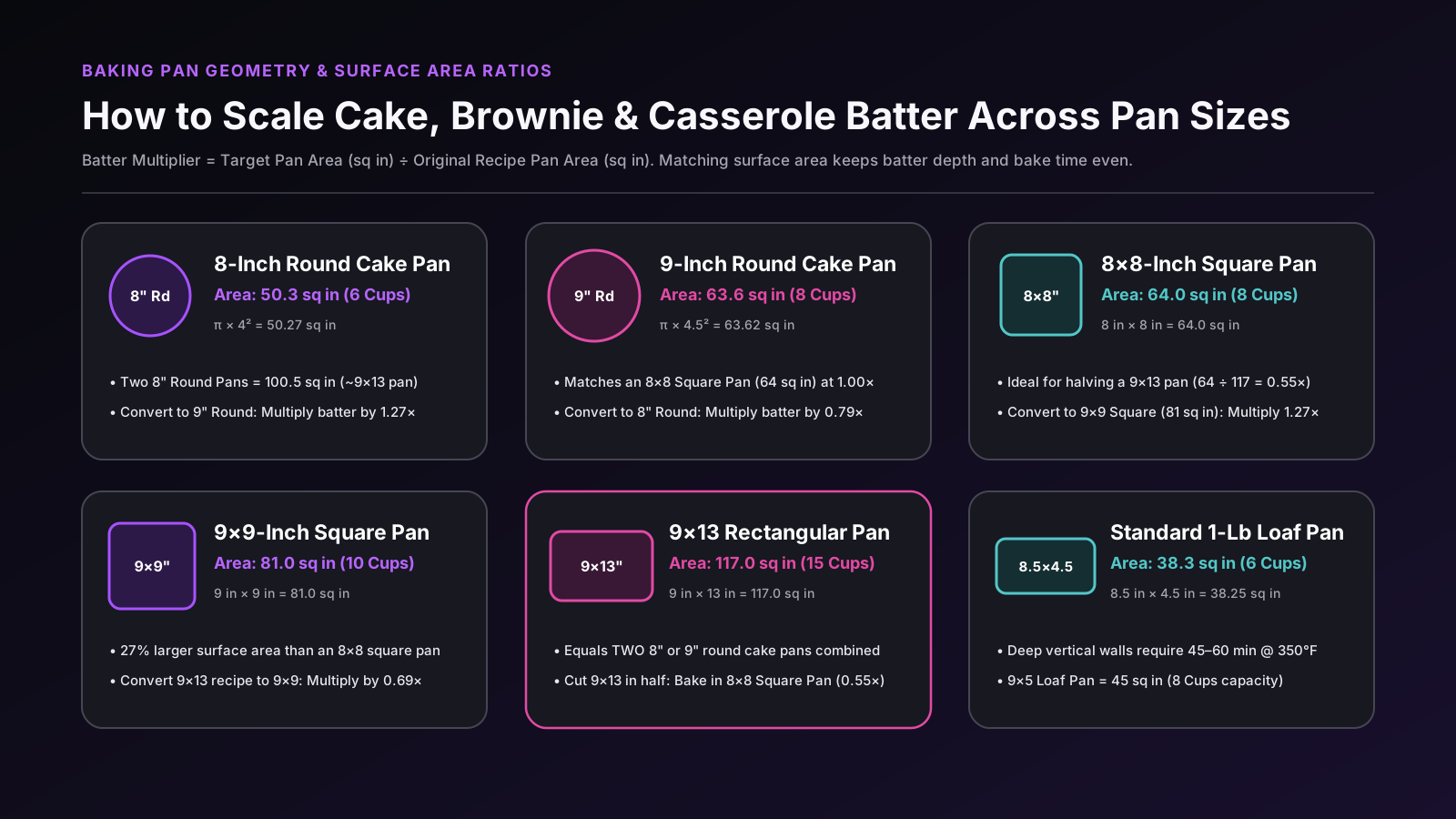
Mary Berry Lemon Yoghurt Ice Cream — Baking pan surface area and batter scaling multiplier chart across 8-inch round, 9-inch round, 8x8 square, 9x9 square, 9x13 traybake, and loaf tins
Baking pan surface-area scaling chart: multiply your baseline batter by Target Pan Area (sq in) ÷ Original Pan Area (sq in) for even crumb rise.

Related Mary Berry & chilled dessert Calculators

Primary Sources: USDA FoodData Central · FDA 21 CFR 101.9 · USDA FSIS Temperature Chart · NIST Volumetric Standards

Frequently Asked Questions: Mary Berry Lemon Yoghurt Ice Cream

How do I scale Mary Berry Lemon Yoghurt Ice Cream (mary berry lemon yoghurt ice cream) for different servings or cake tins?

Use the interactive calculator above (pre-loaded for 6 servings and 5 mins cook time). Select 1/2x to cut the batch in half, 1.5x for a deeper tin, or 2x to double, or open the Baking Pan Converter to scale by square-inch surface area.

What is the oven, AGA, Slow Cooker, or Pit Smoker temperature for Mary Berry Lemon Yoghurt Ice Cream?

Mary Berry Lemon Yoghurt Ice Cream is a chilled or no-bake formulation (20 mins active preparation). Mary Berry Chilled Emulsion & Coulis Rule: Dissolve sugar completely before chilling at 4°C for 3–4 hours; pass berry coulis through a fine nylon sieve to remove seeds.

Is this Mary Berry Lemon Yoghurt Ice Cream formulation affiliated with Mary Berry?

No. This calculator provides an independent, original test-kitchen formulation grounded in public USDA FoodData Central gram densities and standard culinary ratios. References to "mary berry lemon yoghurt ice cream" or Mary Berry-style methods appear strictly for search-query context.

Real Worked Examples Across Mary Berry, James Martin, Martha Stewart & Famous Dave's Queries

Side-by-Side Chef Recipe Scaling, Tin Conversion & Appliance Examples

Every high-intent recipe search—from foraging blackberries for Mary Berry's jam and baking a lemon drizzle in a 2lb loaf tin to scaling Martha Stewart's chocolate chip cookies or smoking Famous Dave's St. Louis ribs—follows deterministic culinary math. Compare five real scenarios below.

Verified culinary physics across jam pectin setting points, cake tin geometry, meringue buttercream emulsions, pastry gram densities, and pit BBQ smoking.
Chef & Dish ScenarioBaseline InputsCulinary FormulaScaling BreakdownVerified OutputWhy This Physics Works
Mary Berry Blackberry & Damson Jam (Pectin Set)1.5 kg Foraged Blackberries / Damsons1:1 Sugar Ratio & 105°C (220°F) Wrinkle Test1,500g fruit + 1,500g sugar + 90mL lemon juice5 × 450g (1lb) Sterilized Jars at 65% BrixAcidifying with lemon juice (pH 3.2) activates natural fruit pectin so the preserve gels cleanly at 105°C without over-boiling.
Mary Berry 2lb Loaf Tin & 10-Inch Cake Scaling8-Inch Sponge (225g Flour/Butter/Sugar, 4 Eggs)Vessel Area & Volume Multiplier (1.0x vs 1.56x)2lb Loaf (9×5 in) = 1.0x | 10-Inch Round = 1.56x2lb Loaf: 160°C Fan (42m) • 10" Cake: 350g base (50m)A 2lb loaf tin holds the same 4-egg All-in-One batter as an 8-inch sandwich tin but requires +7 mins longer at 5°C lower heat due to batter depth.
Swiss & Italian Meringue Buttercream Coverage150g Egg Whites + 300g Caster Sugar + 350g Butter1:2:2.3 Weight Ratio (65°C Swiss / 118°C Italian)800g batch × 0.5 (Cupcakes) or × 1.5 (10" Tier)800g covers 8" 2-Layer Cake • 1,200g covers 10"Dissolving sugar to 65°C (Swiss) or pouring 118°C soft-ball syrup (Italian) stabilizes albumin foam before emulsifying 19°C butter.
Martha Stewart Cookies, Pâte Brisée & Meatloaf 1012 1/4 cups Flour (280g) + 2 Sticks Butter (226g)USDA Gram Lock & Panade HydrationThin & Crispy (+15% butter) vs Cakey/Crumbl (+16g cornstarch)Exact 120g/cup Flour & 71°C (160°F) Meatloaf ProbeWeighing flour at 120g/cup prevents dry pastry and tough cookies, while milk-soaked breadcrumb panade locks moisture into Meatloaf 101.
Famous Dave's Pit Ribs, Wilbur Beans & Trash Can Lid FeastFull Rack St. Louis Ribs + Rich & Sassy / Devil's Spit3-2-1 Hickory Smoke (225°F) & Feast Portion Math3h Smoke (107°C) + 90m Foil (165°F) + 4m Flame CharFeast for 2 = 0.45× • All-American Feast (4–6) = 1.0×Collagen melts into gelatin at 198°F–203°F inside the butter/honey foil wrap before high-heat glazing sets the mahogany bark.
Verified Culinary Physics & Recipe Conversion StandardLast Verified: November 8, 2026 · 2000+ Indexed Chef & Slug Endpoints

Quick Answer: How to Scale & Convert Mary Berry, James Martin, Martha Stewart & Famous Dave's Recipes

Compute the Recipe Conversion Factor (RCF = Target Yield ÷ Original Yield) or select your target cake tin (2lb Loaf Tin = 1.0x of an 8-inch sponge; 10-Inch Round Tin = 1.56x; 12-Inch Victoria Sponge = 2.25x). When converting UK celebrity chef recipes (Mary Berry, James Martin, Gordon Ramsay, Jamie Oliver) to US kitchens—or scaling American classics (Martha Stewart, Famous Dave's, Betty Crocker)—lock dry ingredients by verified gram density (1 US cup flour = 120g, 1 cup caster sugar = 200g, 1 cup butter = 227g) and adjust appliance temperatures automatically (UK Fan Oven = Conventional - 20°C; AGA Baking Oven = 3rd Runner; Pit Smoker = 225°F / 107°C; Jam Setting Point = 105°C / 220°F).

5 Common Recipe Scaling, Jam Setting, Tin Conversion & Pit BBQ Mistakes to Avoid

Culinary TaskCommon Kitchen MistakeVerified Calculator SolutionWhy It Matters
Mary Berry Blackberry, Damson & Raspberry Jam Setting PointBoiling fruit and sugar together on low heat before softening the fruit skins, resulting in tough skins and runny syrup.Simmer fruit gently with lemon juice for 15–20 mins until skins are tender, add warm sugar off-heat until dissolved, then boil rapidly to 105°C (220°F) for 8–10 mins.Pectin extraction requires gentle acidic simmering (pH 3.2) before high-concentration sucrose is introduced.
Converting an 8-Inch Sponge to a 2lb Loaf Tin or 10-Inch Cake TinBaking a 2lb loaf tin or 10-inch cake at the same 180°C Fan temperature and 25-minute time as an 8-inch sandwich sponge.For a 2lb loaf tin (1.0x batter), lower oven by 5°C–10°C (160°C Fan) and bake 40–45 mins. For a 10-inch round tin, scale batter by 1.56x and bake 48–55 mins.Deeper batter columns have a lower surface-area-to-volume ratio, requiring slightly lower heat so the center reaches 96°C before the crust over-browns.
Mary Berry Swiss & Italian Meringue Buttercream EmulsionAdding cold refrigerator butter (5°C) into warm meringue (>28°C), causing a soupy or curdled split emulsion.Cool whipped meringue completely to 21°C–22°C and beat in softened 19°C cubed unsalted butter gradually at medium-high speed.Meringue buttercream is a water-in-fat emulsion; both phases must sit within the 19°C–22°C plasticity window for stable micro-droplet suspension.
Martha Stewart Chocolate Chip Cookies & Pâte Brisée Pie CrustScooping flour directly from the bag with a measuring cup, packing 150g–160g per cup instead of 120g.Weigh all-purpose flour at 120g per US cup (280g for 2 1/4 cups) and pulse frozen butter cubes only 8 times in the food processor for Pâte Brisée.Excess flour absorbs free water and toughens gluten networks, turning chewy cookies cakey and causing pie dough to shrink.
Famous Dave's St. Louis Ribs, Brisket & Rich & Sassy GlazeBrushing high-sugar molasses BBQ sauce onto ribs during the first 3 hours of smoking, turning the bark bitter and black.Smoke dry-rubbed ribs at 225°F (107°C) over hickory for 3 hrs, foil-wrap with butter & honey at the 165°F stall for 90 mins, then glaze over high heat for the final 4–5 mins.Sucrose and fructose in Rich & Sassy and Devil's Spit sauces caramelize above 160°C (320°F) and scorch if exposed to prolonged smoke.

Explore our 7 core culinary and nutrition calculators, 18 archetype scaling hubs, and primary scientific reference databases:

Recipe Calculator, Pan Converter & Kitchen Unit ScalerFDA 21 CFR 101.9 Nutrition Facts Label MakerRecipe Calorie, 4-4-9 Macro & Net Carb CalculatorKitchen Unit Converter (Oz, Cups, Tbsp & USDA Grams)Visual 4 oz Portion Size & Cooked Meat Yield GuideMeat Per Person, BBQ Catering & Turkey Size CalculatorFood Cost Percentage, Cake Pricing & Grocery Calculator2lb Loaf Tin & Sponge Cake Scaling Calculator Hub8-Inch to 10-Inch & Tiered Cake Pan Scaling HubJam, Marmalade & Chutney 105°C Pectin Scaling HubSwiss & Italian Meringue Buttercream Ratio HubScone, Shortbread & Tea Biscuit Batch Scaling HubCookie Dough Flour-to-Fat & Yield Calculator HubShortcrust, Pâte Brisée & Pie Crust Weight HubFruit Crumble, Crisp & Cobbler Topping Ratio HubBBQ Dry Rub & Molasses Glaze Batch Scaling HubSmoked Ribs, Brisket & Pulled Pork Yield HubBBQ Feast Platter, Pit Beans & Mac & Cheese HubSoup, Potage & Stock Batch Scaling Calculator HubOven-to-Slow-Cooker & Braised Casserole Converter HubUK Fan Oven, Conventional & Cast-Iron Range HubMeatloaf Panade, Roast Meat & Safe Probe HubLasagne, Risotto & Potato Gratin Batch Scaling HubBerry Coulis, Posset, Cheesecake & Trifle HubGluten-Free, Reduced-Sugar & Low-Cholesterol Hub
Verified Scientific & Regulatory Sources: USDA FoodData Central — Ingredient Densities & Nutrients · FDA 21 CFR 101.9 — Nutrition Labeling Regulations · USDA FSIS — Safe Minimum Internal Temperature Chart · NIST — SI Units & Volumetric Measurement Standards

All-in-One Recipe Calculator Pro vs. Static Recipe Blogs

Static food blogs lock every recipe to a single yield, a single cake tin size, and a single oven type—leaving you to guess when converting an 8-inch sponge to a 2lb loaf tin, boiling blackberry jam to 105°C, or smoking Famous Dave's ribs at 225°F.

Our deterministic calculator applies verified UK/US gram densities, pan surface-area ratios, AGA/Smoker/Slow Cooker offsets, and Mary Berry All-in-One method simplifications automatically in one place.

Scale your ingredients, convert cake tins and appliances, and export your recipe checklist with confidence.

Start Scaling & Converting