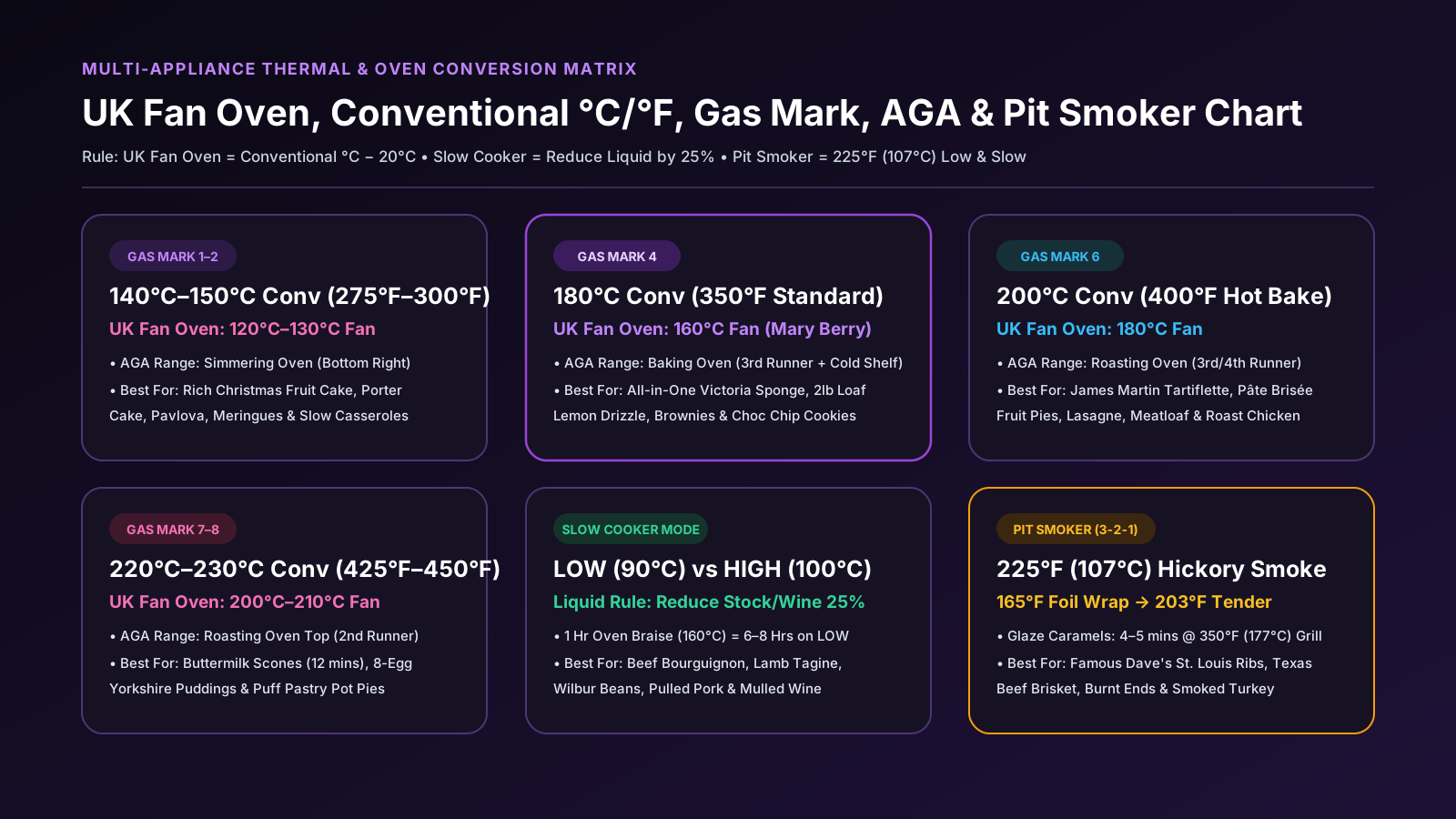
1. The 4 : 3 : 2 : 1 Pitmaster Dry Rub Formula & Coverage Rate
Kansas City, Memphis, and competition-style pork dry rubs balance caramel sweetness, mahogany color, salinity, and pungent heat using a 4 : 3 : 2 : 1 weight ratio: 40% dark or light brown sugar, 30% sweet smoked paprika, 20% kosher salt and coarse 16-mesh black pepper, and 10% granulated garlic, onion powder, dry mustard, celery seed, and cayenne.
Weighing 20g of dry rub per pound (44g per kilogram) of raw St. Louis pork ribs or pork shoulder coats the meat evenly without forming a muddy crust. For a 200g base jar of pork rub (enough for 10 lbs / ~3 to 4 racks of ribs), combine 80g brown sugar, 60g paprika, 25g Diamond Crystal kosher salt, 15g coarse black pepper, 8g garlic powder, 6g onion powder, 4g mustard powder, and 2g cayenne.
2. Sugar Scorch Limits (135°C–149°C) & Glaze Application Timing
Sweet-and-smoky barbecue sauces built on ketchup, tomato puree, blackstrap molasses, honey, and brown sugar contain 35% to 42% dissolved sugars (Brix). While pure sucrose caramelizes around 160°C (320°F), the fructose and invert sugars in honey, molasses, and tomato paste begin darkening and turning acrid between 135°C and 149°C (275°F–300°F).
Because of that low scorch threshold, never brush high-sugar glazes onto ribs, chicken, or burnt ends at the beginning of a multi-hour cook. Smoke the meat with dry rub alone at 107°C–121°C (225°F–250°F), then brush on 45mL (3 tablespoons) of warmed glaze per pound of meat during the final 10 to 15 minutes of indirect smoking at 250°F–275°F (or the final 2 to 4 minutes over direct grill grates) so the sauce tacks into a glossy lacquer.
3. Texas Dalmatian Brisket Rub vs Chipotle & Mop Sauces
For long 10-to-14-hour beef brisket cooks at 250°F–275°F, pitmasters omit sugar entirely to prevent blackened bark, using a savory Dalmatian rub of 45% coarse 16-mesh black pepper, 40% kosher salt, and 15% granulated garlic applied at 18g per pound of trimmed raw brisket.
When simmering a 720mL (3 US cup) batch of rich molasses-hickory rib glaze or fiery chipotle-habanero wing glaze, balance 60% tomato base (430g ketchup/tomato puree) with 18% molasses and dark brown sugar (130g), 12% apple cider vinegar and Worcestershire sauce (85mL), and 10% bloomed spices, liquid hickory smoke, or pureed chipotle peppers in adobo (75g), simmering gently at 92°C for 20 minutes.
4. Apple Cider Vinegar Spritzing & Smoke Ring Chemistry
Nitric oxide (NO) and carbon monoxide (CO) gases generated by burning hardwood logs dissolve into moisture on the cold meat surface to form the pink myoglobin smoke ring before the outer meat reaches 60°C (140°F). Once the bark sets after 2 hours of smoking, misting ribs or pork shoulder every 45 to 60 minutes with a 55% apple cider vinegar, 30% water/apple juice, and 15% honey spritz cools the surface slightly and prevents dry edges.
Always apply a thin binder of yellow mustard, Worcestershire sauce, or water 20 minutes before loading the smoker so the salt in the dry rub dissolves into surface moisture via osmosis.
5. Airtight Spice Jar Storage, Bottling Glazes & Context
Store mixed brown-sugar and smoked-paprika dry rubs in amber glass mason jars away from stove heat with a food-safe silica packet or dried beans in a muslin pouch so humidity does not clump the molasses crystals. Simmered vinegar-and-tomato BBQ glazes (pH below 4.2) keep in sterilized glass bottles inside the refrigerator for up to 3 weeks; warm 150mL of sauce in a small ramekin before brushing onto meat so you never dip a raw-meat basting brush back into your main bottle.
These 4:3:2:1 spice weights and sugar caramelization limits are independent barbecue formulation guides and have no corporate link to Famous Dave's or any commercial restaurant.