How much raw brisket, pork butt, or spare ribs do I need to buy per guest after smoking shrinkage?
Raw barbecue cuts lose 40% to 50% of their weight during trimming and smoking: divide your target cooked meat weight by 0.55 for whole packer beef brisket, 0.60 for bone-in pork shoulder, 0.50 for bone-in St. Louis spare ribs, or 0.58 for boneless rib tips.
What causes the 150°F to 165°F (66°C–74°C) evaporative stall when smoking brisket or pork butt?
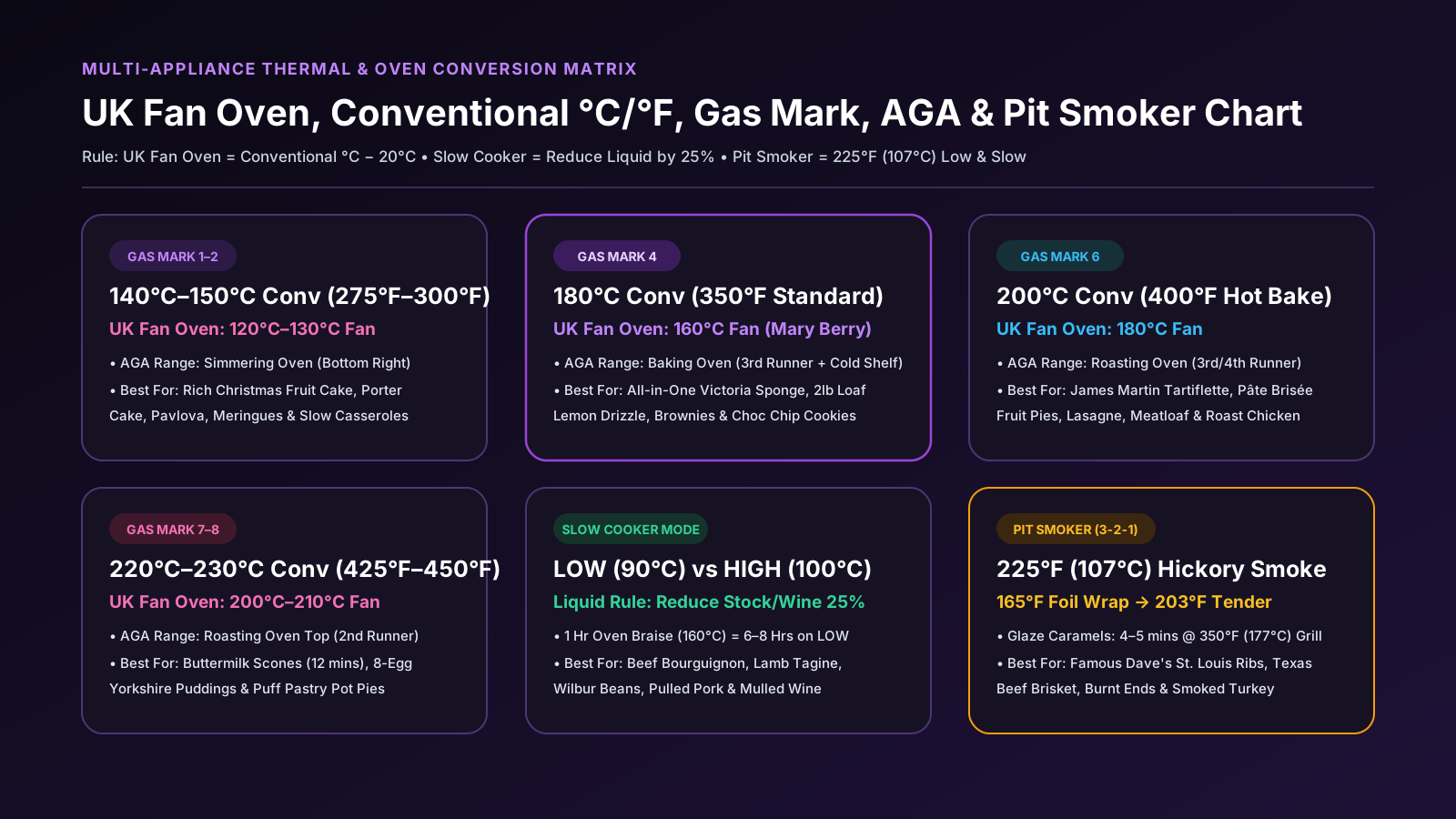
As meat heats above 65°C, moisture sweating to the surface evaporates and cools the roast at the same rate the 225°F–250°F smoker heats it; wrapping tightly in unwaxed pink butcher paper or foil once the bark sets halts evaporative cooling and powers through the stall.
Why are smoked ribs, brisket, and pulled pork cooked to 200°F–205°F (93°C–96°F) instead of 145°F?
Although beef and pork are microbiologically safe at 145°F–160°F (63°C–71°C), tough collagen connective tissue in brisket, ribs, and shoulder only hydrolyzes into tender gelatin between 198°F and 205°F (92°C–96°C).
How long does a 14.5 lb packer brisket take to smoke at 225°F–250°F when wrapped in butcher paper?
Wrapped at the 160°F–165°F stall, a brisket takes roughly 0.75 to 1.0 hour per pound of cooking time (~6.5–7.5 hours unwrapped plus 3.5–4.5 hours wrapped to 203°F), followed by a mandatory 2-hour rest in an insulated cooler.
How do I make cubed brisket burnt ends or Southside rib tips tender without drying them out?
Cube the smoked point muscle or rib tip strip at 195°F (90°C), toss in a foil pan with butter, rub, and glaze, and braise at 250°F for 45 to 60 minutes until the cubes probe like soft butter at 203°F–205°F.
Are the smoked meat presets affiliated with Famous Dave's or any commercial smokehouse?
No—every smoker yield factor and time/temperature table in this calculator is an independent meat-science reference compiled from USDA yield data, unaffiliated with any restaurant brand.