1. Pectin-Sugar-Acid Gelation Chemistry at 65% Brix
Fruit jams and marmalades gel when long-chain galacturonic acid molecules (pectin) extracted from fruit cell walls cross-link into a three-dimensional mesh that traps water and syrup. In high-methoxyl fruit preserves, two conditions are mandatory for those chains to bond: soluble solids must reach 60% to 65% Brix (dissolved sugar concentration) so water molecules are drawn away from the pectin, and fruit acidity must sit between pH 3.0 and 3.3 so negative carboxyl charges on the pectin stop repelling one another.
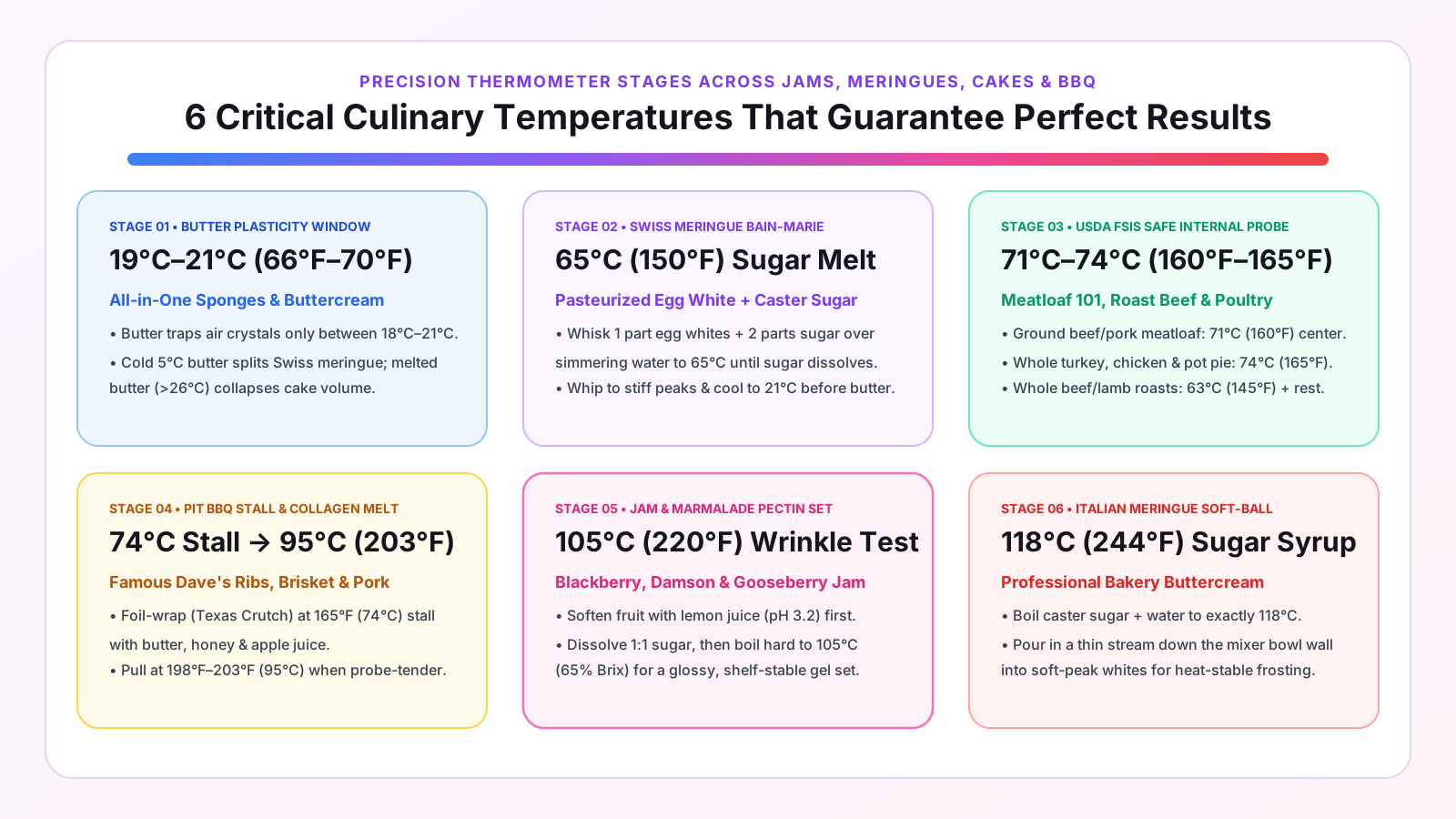
At standard sea-level atmospheric pressure (101.3 kPa), a fruit-and-sugar syrup reaches 65% soluble solids when its boiling temperature hits 105°C (220°F–221°F)—about 5°C above the boiling point of pure water. If your kitchen is at high altitude, reduce the target setting temperature by roughly 1°C (1.8°F) for every 300 metres (1,000 feet) above sea level.
2. Balancing High-Pectin vs Low-Pectin Fruit Batches
Fruits vary widely in both endogenous pectin and citric/malic acid content. Cooking apples (Bramleys), damsons, sour plums, gooseberries, redcurrants, and Seville oranges are naturally rich in both pectin and acid, setting reliably at a 1 : 1 fruit-to-granulated-sugar weight ratio (1,000g sugar per 1,000g prepared fruit) after a 6 to 8 minute rapid boil at 105°C.
Blackberries, raspberries, loganberries, and sweet apricots have moderate pectin and benefit from adding 45mL to 60mL (3 to 4 tablespoons) of fresh lemon juice per kilogram of fruit. Low-pectin fruits such as hulled strawberries, rhubarb, and ripe peaches require either commercial pectin-enriched preserving sugar or 60mL–75mL lemon juice plus grated cooking apple to achieve a firm set.
3. Two-Stage Simmer-Then-Boil Workflow & Evaporation Yield
Never add granulated sugar to raw fruit at the start of cooking: high sugar concentrations toughen fruit skins through osmosis and block pectin extraction. Instead, simmer blackberries, damsons, or plums gently with lemon juice (and 100mL–150mL water for firm stone fruit) for 15 to 20 minutes until the cell walls soften completely.
Warm your weighed sugar in a low oven at 120°C (250°F) for 10 minutes, stir it into the softened fruit off the heat until no gritty crystals remain on the spoon, then bring the pan to a vigorous rolling boil for 8 to 12 minutes. Because ~18% of the combined pre-boil weight evaporates as steam, 1,000g fruit plus 1,000g sugar (2,000g raw) yields approximately 1,640g of finished jam—filling about 3.6 standard 450g (1lb) jars or 4.8 standard 340g (12oz) jars.
4. Spiced Vinegar Chutneys & Cold-Saucer Wrinkle Verification
Savory preserves such as runner bean chutney, green tomato chutney, and spiced marrow chutney preserve via acetic acid and slow starch concentration rather than a rapid 105°C pectin boil. Simmer diced vegetables with 600mL malt or cider vinegar (minimum 5% acidity) and 450g soft brown sugar per kilogram of prepared produce uncovered for 45 to 60 minutes until a wooden spoon drawn across the pan base leaves a clear channel for 2 seconds.
To double-check jam set without relying solely on a digital probe, place three small plates in the freezer before cooking. Spoon 5mL of boiling jam onto a chilled saucer, wait 60 seconds in the fridge, and push the edge with your fingertip: if a skin wrinkles and holds its ridges without running, pull the pan from the heat immediately.
5. Hot-Jar Sterilization, Headspace Vacuum Seals & Context
Wash glass preserving jars in hot sudsy water, rinse well, and heat them upright on a baking tray at 130°C (265°F) for 20 minutes while your fruit boils. Ladle finished 105°C jam through a wide-mouth stainless funnel to within 5mm of the top rim, lay a waxed paper disc wax-side down on the surface if using traditional covers, and twist on new plastisol-lined lids immediately to pull a concave vacuum seal.
These 65-Brix sugar-to-fruit equations and citric-acid pH guidelines are compiled from public food-preservation chemistry and carry no commercial tie to any preserve manufacturer or television personality.