CULINARY & NUTRITION GUIDE
How to Scale, Cut in Half, or Double a Recipe Without Ruining Texture
Complete culinary math guide to scaling recipes up or down: Recipe Conversion Factor (RCF), awkward half-fractions, baking pan area ratios, and yeast/spice adjustments.
1. Find the Recipe Conversion Factor (RCF) using recipe yield
In culinary terminology, the total number of servings or portions a recipe is designed to make is called its yield. Whether you want to cut a 12-serving casserole recipe in half for two people or triple a batch of cookies for a bake sale, every scaling calculation starts with the Recipe Conversion Factor (RCF).
Divide your Desired Servings by the Original Servings (RCF = Desired Yield ÷ Original Yield). To cut a recipe in half, multiply every ingredient by 0.5. To scale a 6-serving recipe up to 10 servings, multiply every ingredient by 10 ÷ 6 = 1.67.
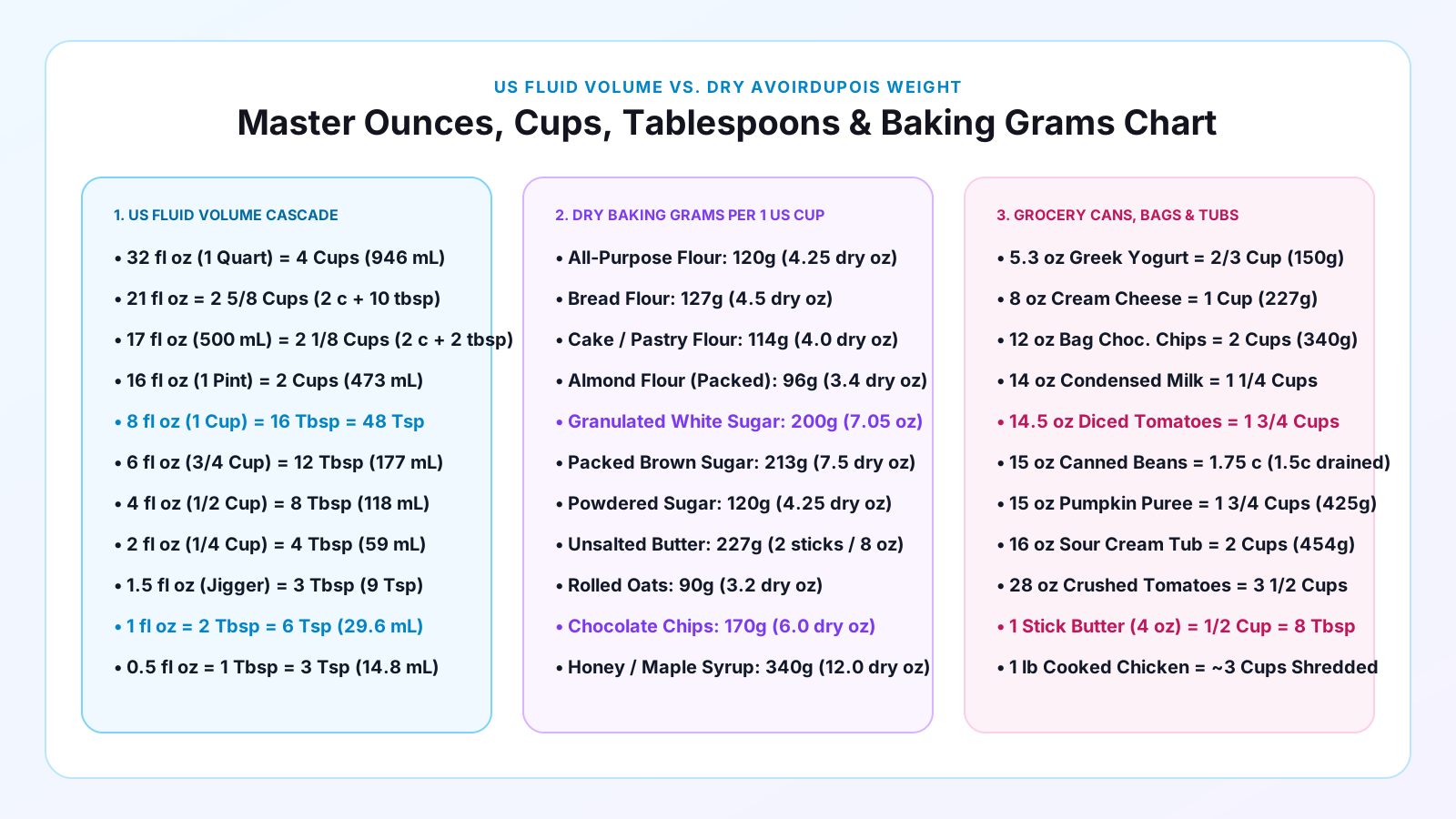
- Cut a recipe in half (0.5x): 3/4 cup becomes 6 tablespoons (1/4 cup + 2 tbsp); 1/3 cup becomes 2 tablespoons + 2 teaspoons.
- Cut a recipe in thirds (0.33x): 1 cup becomes 1/3 cup; 3/4 cup becomes 1/4 cup (4 tbsp); 1/2 cup becomes 2 tablespoons + 2 teaspoons.
- Double a recipe (2x): 3/4 cup becomes 1 1/2 cups; 2/3 cup becomes 1 1/3 cups; 6 tablespoons becomes 3/4 cup.
- Triple a recipe (3x): 1/4 cup (4 tbsp) becomes 3/4 cup; 2/3 cup becomes 2 full cups.
2. How to divide 1 egg when cutting a baking recipe in half
One standard US Large Egg weighs 50 grams out of the shell (approximately 30g egg white and 20g yolk) and measures about 3.25 tablespoons (roughly 1/4 cup minus 1 teaspoon) when whisked.
To use half an egg in a halved cookie or cake recipe, crack the egg into a small bowl, whisk until the yolk and white are homogeneous, and measure out 25 grams on a digital kitchen scale (or 1 tablespoon + 1.5 teaspoons).
3. Adjust baking pan surface area and spices on large batches
When doubling or halving cake, brownie, or quick-bread batters, match the square-inch surface area of your pan so the batter stays the same depth. An 8×8-inch square pan holds 64 square inches (practically identical to a 9-inch round cake pan at 63.6 sq in), whereas a 9×13-inch rectangular pan holds 117 square inches—nearly double the surface area.