Mary Berry Paella Recipe
One illustrated guide to Mary Berry's chicken, chorizo and seafood paella, followed by practical notes on saffron, rice texture and seafood timing.
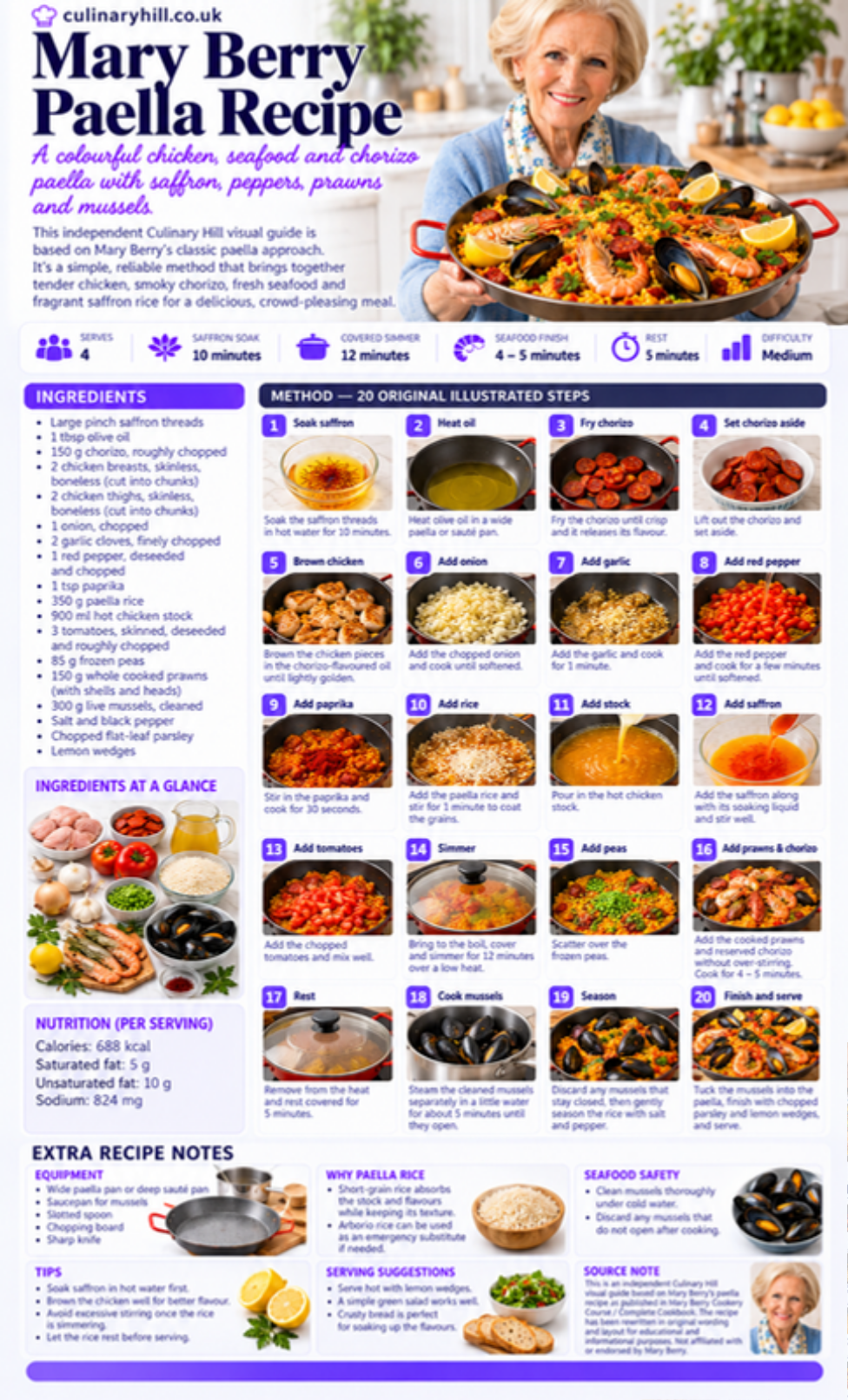
What matters most when making this paella
Mary Berry's paella in Mary Berry Cookery Course is built around a combination of chicken, chorizo, saffron rice, prawns and mussels. The recipe is designed for a wide pan, where the rice can cook in a relatively shallow layer and absorb the stock evenly. If you do not have paella rice, Mary's book specifically notes that Arborio can work as a substitute, although the finished texture may be a little different.
Saffron is one of the details worth handling carefully. Soaking the threads before they go into the pan helps disperse their colour and aroma more evenly through the stock. Chorizo also does more than add pieces of sausage: browning it first releases seasoned fat into the pan, which then becomes part of the flavour base for the chicken and vegetables.
Once the stock and rice are together, avoid treating the pan like a risotto. Frequent stirring encourages the grains to release more starch and can move the dish toward a creamier consistency. Mary's method instead lets the rice simmer, then adds the peas, cooked prawns and reserved chorizo without vigorous stirring. A wide pan also helps the liquid reduce at a predictable rate.
The seafood needs separate judgement. Live mussels should be cleaned before cooking, and any shells that remain closed after cooking should be discarded. Because the prawns in this version are already cooked, they only need enough time in the paella to heat through. Leaving them in too long can make them firm and dry.
Resting the covered pan after the rice is cooked is useful rather than optional. Those few minutes allow remaining moisture to redistribute and give the rice a more settled texture before serving. Taste only after the rest, because the chorizo, stock and shellfish all contribute seasoning.
Serve the paella straight from the pan with parsley and lemon wedges. The infographic above contains the full ingredient quantities and visual method; these notes focus on rice texture, flavour development and seafood handling so the article adds useful information without repeating the same recipe instructions.