Mary Berry Bramley Apple Pie
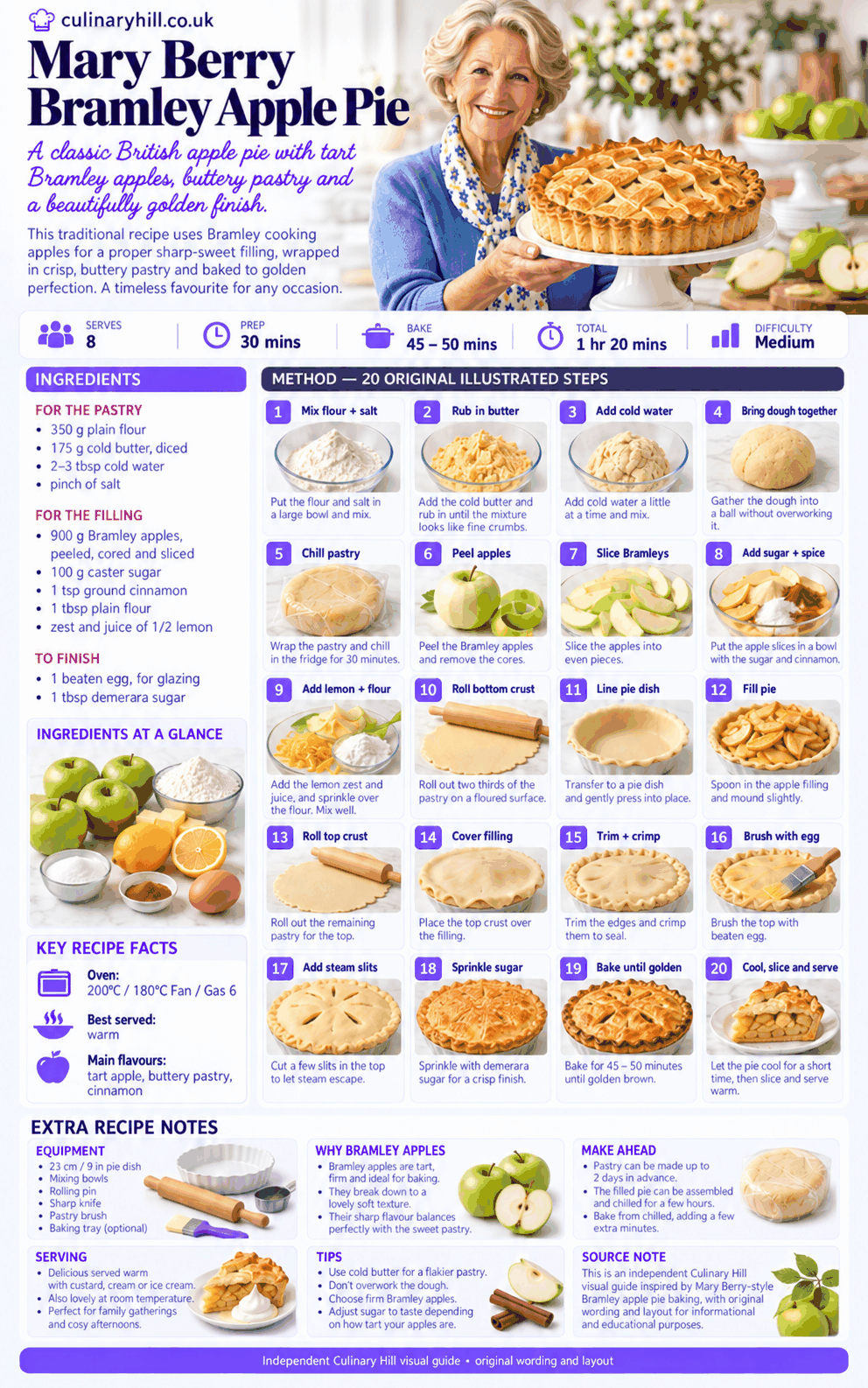
One visual guide to a Bramley-focused apple pie, followed by practical notes on choosing cooking apples, controlling moisture and keeping the pastry crisp.
What matters most when baking with Bramley apples
Bramley apples are particularly useful in a double-crust pie because their sharp flavour stands up to sugar and rich pastry. Mary Berry's published double-crust apple pie allows either dessert or cooking apples, and in another Mary Berry programme she specifically describes a Bramley as an ideal cooking apple. That makes Bramley a sensible choice when you want a distinctly tart, traditional British filling.
The biggest variable is moisture. Bramleys soften readily and can release plenty of juice as they heat. Slice them to a fairly consistent thickness so they cook at the same rate, and avoid leaving the sweetened filling sitting for a long period before the pie is assembled. The longer sliced apples stand with sugar, the more liquid they can draw into the bowl.
Pastry handling matters just as much as the fruit. Keep the fat and dough cool, use only enough liquid to bring the pastry together, and stop working it once it is cohesive. When lining the dish, ease the pastry into the corners instead of stretching it; stretched pastry is more likely to shrink during baking.
A properly heated oven and a hot baking surface can help the bottom crust set before apple juices have time to soak into it. Mary Berry's published double-crust method uses a preheated baking sheet for this reason. Steam vents in the top crust are also functional, giving moisture a controlled route out of the pie while the pastry colours.
Do not judge the filling only by the colour of the lid. The pastry can look ready before thick apple slices have fully softened. Check through a steam opening with the point of a small knife: the fruit should offer little resistance without having collapsed into a completely smooth purée.
Finally, let the baked pie stand briefly before cutting. The filling settles as it cools, giving neater portions and reducing the chance of hot juices flooding the plate. The infographic above carries the complete visual sequence; these notes focus on the small decisions that make a Bramley pie easier to bake and serve successfully.